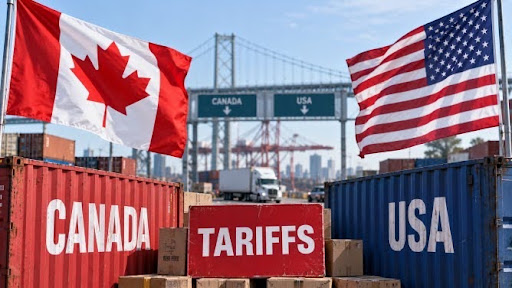
In a significant escalation of trade tensions, Canada has introduced a series of tariffs on American imports, valued at billions of dollars, in response to measures taken by the United States. These new tariffs, which range from 15% to 50%, were implemented at the start of Tuesday, targeting around $20 billion worth of U.S. goods. The affected imports include a variety of products such as steel, dairy items, appliances, agricultural machinery, pulp and paper, and electronics.
This move by Canada comes as a counter to the United States’ decision to impose a 50% tariff on Canadian goods of equivalent value. Canadian Prime Minister Mark Carney has stated that in light of these developments, Canada will expedite its efforts to lessen its economic reliance on the United States by seeking to establish more robust trade partnerships with other nations.
The trade discord has been further fueled by U.S. President Donald Trump’s imposition of tariffs on Canadian products, including automobiles and raw materials, citing claims that Canada has been exploiting the U.S. market. This has impacted various Canadian exports to the U.S., such as hockey sticks and cement, which account for about 5.5% of Canada’s total exports to its southern neighbor. The diplomatic relationship between the two nations has also suffered as a result of these trade frictions.
Furthermore, President Trump has issued threats to limit the sales of Canadian aircraft manufacturer Bombardier within the U.S. unless the company shifts more of its manufacturing operations to American soil. This threat only adds to the existing strain between the two countries.
Efforts to resolve the trade dispute through negotiations faltered in August when discussions between Canada and the U.S. collapsed without reaching a consensus. Canadian representatives reported that the breakdown was due to the United States introducing additional demands and constraints that Ottawa found unacceptable. As the trade conflict continues, both countries are seeking ways to navigate the challenges posed by these economic and diplomatic tensions.