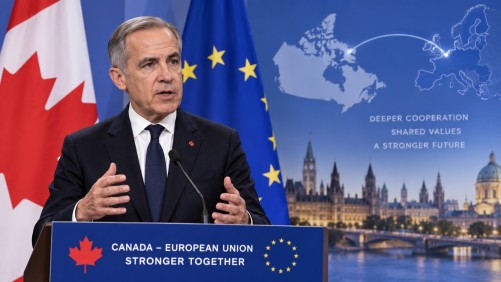
Amidst mounting trade tensions between North America and Europe, a novel proposal has emerged to redefine international alliances. The European Union has suggested that Canada becomes its first associate member, potentially reshaping the strategic landscape between the two regions. This initiative, introduced by European Commission President Ursula von der Leyen, aims to elevate the EU-Canada relationship to unprecedented levels of cooperation.
Canadian Prime Minister Mark Carney, addressing the European Parliament in Strasbourg, expressed strong support for the proposal, emphasizing the potential for deeper collaboration in critical sectors. Carney highlighted areas such as critical minerals, energy security, artificial intelligence, defense, space, and digital trade as key fields where Canada and the EU could enhance their strategic resilience through partnership.
While Carney made it clear that Canada is not pursuing full EU membership, he advocated for closer institutional and economic ties. The exact form and terminology of this associate membership remain subjects for negotiation with European governments and institutions. Carney also mentioned the possibility of expanding cooperation to include youth exchanges and Canadian participation in the EU’s Erasmus+ education and training program.
The concept of EU associate membership is unprecedented and lacks definition in the bloc’s existing treaties. Although several EU member states back the initiative to strengthen ties with Canada, some have shown hesitation regarding the proposed designation. Despite these reservations, the proposal signals a significant potential shift in international relations, particularly as the EU and Canada already share several trade and sectoral agreements.
This development occurs against a backdrop of heightened trade disputes, particularly with the United States. U.S. President Donald Trump has criticized the EU’s proposal, cautioning that it could lead to potential tariffs if the EU and Canada proceed with deepening their relationship. This geopolitical context adds complexity to the negotiation dynamics as Canada and the EU explore this innovative alliance.