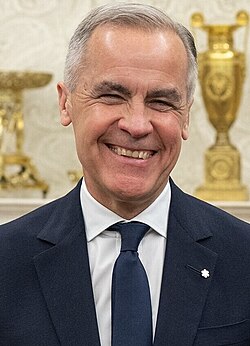
Mark Carney, the Canadian prime minister, has emphasized that Europe can serve as the foundation for reconstructing a new international order rather than succumbing to a more severe global environment. Carney made this statement while attending the European Political Community (EPC) meeting, marking the first instance of a non-European leader participating in such an event. The meeting, which commenced on Monday in Yerevan, Armenia, took place amid heightened tensions in the Strait of Hormuz and growing skepticism about the United States’ commitment to NATO.
During his address, Carney suggested that the era of American dominance might be waning. He articulated his belief that Europe would play a pivotal role in rebuilding the international order, highlighting the continent’s capacity to uphold a rules-based system. Carney noted that the world is experiencing significant disruptions, with integration being used for strategic purposes and traditional rules failing to restrain dominant powers. The selection of Yerevan as the meeting venue underscored Europe’s resolve to prevent Armenia from reverting to Russian influence.
Concerns over the US’s dedication to NATO were exacerbated by former President Donald Trump’s unexpected decision to withdraw over 5,000 troops from Germany, intensifying European anxieties about the reliability of transatlantic relations. British Prime Minister Keir Starmer acknowledged the strain in traditional alliances, urging leaders to address these tensions as their responses could shape international dynamics for years to come. French President Emmanuel Macron echoed this sentiment, asserting that Europe is increasingly taking control of its destiny by bolstering defense and security investments and creating unified solutions.
Ukrainian President Volodymyr Zelenskyy projected that Russia would face a critical juncture in the summer, presenting an opportunity to either escalate the conflict or engage in diplomacy. He stressed the importance of maintaining sanctions against Russia if it refuses to pursue peace, advocating for European involvement in diplomatic negotiations. Meanwhile, Trump’s contemplation of reducing troop presence in Italy and Spain, due to perceived insufficient support for US-Israeli actions against Iran, further complicated transatlantic relations. As of late 2025, the US maintained substantial troop contingents in Germany, Italy, and Spain.
Responding to the troop withdrawal plans, the EU’s foreign policy chief, Kaja Kallas, remarked that the timing was unexpected and emphasized the need to reinforce the European pillar within NATO. When questioned about whether Trump was retaliating against German Chancellor Friedrich Merz for describing US-Iran negotiations as humiliating, Kallas refrained from speculating on Trump’s motives. Merz, who opted out of the Yerevan summit, reiterated his commitment to the transatlantic partnership and collaboration with Trump. NATO chief Mark Rutte acknowledged US frustrations with Europe’s hesitance regarding the Iran conflict but noted that Europe had since increased logistical support for US operations, preparing for future phases of engagement.