President Trump’s approach to Iran, as revealed during his State of the Union Address, can be summarised in a single sentence he used himself: “I will make peace wherever I can, but I will never hesitate to confront threats to America wherever we must.” That formulation captures the essence of his dual-track Iran strategy perfectly.
On the diplomatic front, Trump revealed that two rounds of nuclear negotiations have taken place this month, with Iran apparently eager to reach some form of agreement. Trump said he shares that desire — but insisted that any deal must be built on a clear and permanent Iranian commitment to forgo nuclear weapons.
On the military front, Trump pointed to last year’s Operation Midnight Hammer as evidence of America’s willingness to act. The strike, he said, destroyed Iran’s nuclear weapons programme — but Tehran appears to be trying to rebuild it, defying explicit warnings from Washington.
Trump also flagged an escalating missile threat, saying that Iranian systems already capable of hitting Europe and US overseas bases are being supplemented by longer-range weapons that could eventually threaten American soil. This development, he suggested, makes the need for a durable diplomatic solution all the more urgent.
The contrast between the peace-seeking and war-ready elements of Trump’s approach was not a contradiction — it was a strategy. By keeping both doors open and making the consequences of each choice crystal clear, Trump positioned the United States as both a potential partner and a credible adversary for Iran.
Trump Promises Peace But Prepares for War in Message to Tehran
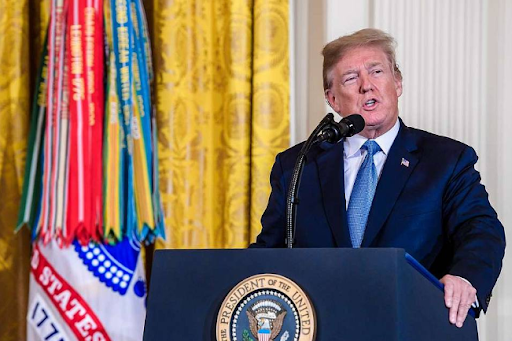
Picture Credit: nara.getarchive.net
50