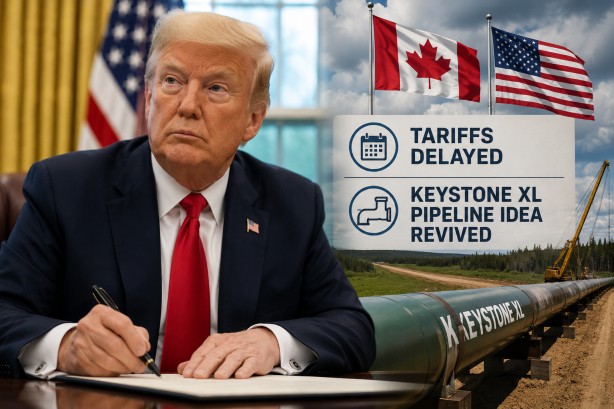
The United States has postponed the imposition of a planned 50% tariff on Canadian goods by three days, according to President Donald Trump. This delay is attributed to what both nations describe as significant advancements toward a new trade agreement. Trump expressed optimism about the negotiations, indicating that a deal is nearing completion. Meanwhile, Canadian Prime Minister Mark Carney shared similar sentiments, acknowledging “substantial progress” but noting that further efforts are necessary to finalize the agreement.
The anticipated tariffs were set to impact billions of dollars in Canadian exports, with goods such as wine and hockey equipment being targeted. The postponement grants additional time for both the U.S. and Canada to refine the terms of their prospective trade deal. Amid these developments, Trump hinted at the potential revival of the Keystone XL oil pipeline project, remarking that it “may be awoken from the grave.” However, he did not elaborate on how the pipeline might factor into the ongoing trade discussions.
Originally intended to transport oil from Canada’s western regions to American refineries, the Keystone XL project was halted after a crucial U.S. permit was rescinded in 2021. This decision came after prolonged opposition from environmental groups, landowners, and Indigenous communities. The mention of its possible revival adds another dimension to the current trade talks between the two countries.
The backdrop to these negotiations includes months of tension between the U.S. and Canada, characterized by threats of tariffs and retaliatory trade measures. Despite these challenges, the two nations continue to be major trading partners, with an annual exchange of hundreds of billions of dollars in goods and services. Canadian businesses have expressed concerns over the proposed tariffs, fearing increased costs and restricted access to the U.S. market.