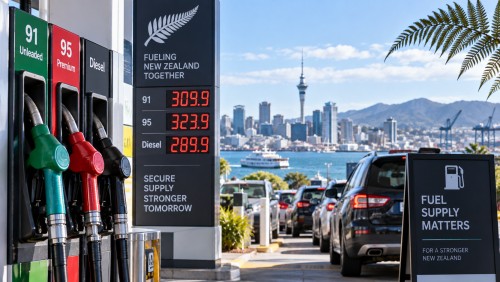
New Zealand’s fuel supply chain is currently stable and adequately meeting local demand. However, recent disruptions in key global energy routes have heightened supply risks. This development comes amid increasing tensions affecting oil shipments through the Strait of Hormuz and Saudi Arabian pipelines, primarily due to the ongoing conflict between the United States and Iran, as well as actions by Iran-aligned Houthi forces in Yemen.
Despite these challenges, Z Energy’s chief executive, Lindis Jones, has reassured that fuel continues to flow into New Zealand, though the process is becoming more time-consuming and costly. The global uncertainty surrounding energy supply lines has added pressure on transportation logistics, which in turn affects delivery timelines and expenses.
One of the consequences of the current situation is a narrowing of supply safety margins. With inventories on the decline and some refineries postponing maintenance to keep production steady, the market’s capacity to handle further disruptions is limited. This precarious balance means that while current demands are being met, the system is less resilient against any additional shocks.
Jones also highlighted that consumers are unlikely to see significant relief in fuel prices in the near future. The persistent instability in global energy markets is expected to maintain elevated prices, adding to the financial burden on end-users. The situation underscores the delicate nature of global energy networks and their susceptibility to geopolitical tensions.