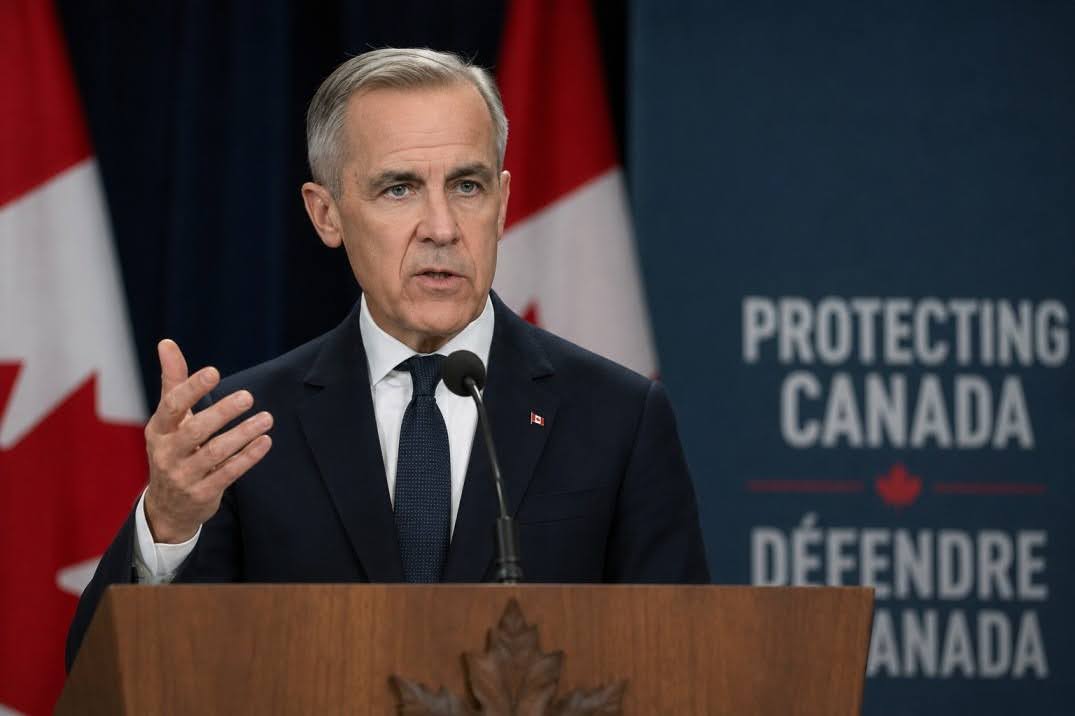
As tensions rise between the United States and Canada, Canadian Prime Minister Mark Carney has openly criticized the Trump administration, urging U.S. officials to abandon their dismissive approach and engage earnestly in trade discussions. This call for serious negotiations comes just before Canada plans to implement retaliatory tariffs on American imports. Carney condemned the disparaging remarks aimed at Canada, asserting that such behavior is unworthy of the esteemed offices involved. He emphasized that meaningful trade negotiations could only proceed if the U.S. moved beyond superficial exchanges and focused on substantive dialogue.
The situation has been escalating for several weeks, particularly after President Trump signed an order to rename Lake Ontario as “Lake America,” a decision that was met with widespread disapproval in Canada. Meanwhile, the chief U.S. trade negotiator has minimized the potential consequences of the trade conflict, arguing that Canada would suffer more economically than the United States and noting that no active trade talks are currently taking place. This discord follows the breakdown of trade negotiations between the two nations approximately a week ago, leading Washington to impose a 50% tariff on $20 billion worth of Canadian goods. In response, Canada, one of the U.S.’s largest trading partners, announced its own set of tariffs on $20 billion worth of American goods, which are scheduled to take effect on September 8. Consumers on both sides are likely to experience the impact, particularly in the cost of everyday products.
The U.S. negotiator has attributed the collapse of the talks primarily to Canadian demands, specifically pointing to requests for lower taxes on heavy-duty trucks as a major sticking point. He questioned Canada’s commitment to reaching an agreement and warned that the U.S. might consider reciprocal measures if Canada chose to restrict American goods and services. However, Canadian officials have presented a different perspective, suggesting that internal disputes within the White House over who was in charge of the negotiations contributed to the breakdown. Carney also mentioned that American negotiators viewed Canada’s French-language protections, especially in Quebec, as a contentious issue, although he stressed that these are long-established rights.
President Trump has framed the disagreement as a matter of Canada seeking the benefits of closer ties with the U.S. without formal integration. He has also accused Canada of imposing heavy tariffs on American agricultural products over the years. The U.S. negotiator acknowledged some confusion over the actual points of contention during the discussions, admitting it was unclear whether political or economic factors were at the root of the impasse. Nevertheless, he insisted that the realistic choice never involved a transition from the current tariffs to entirely duty-free trade.