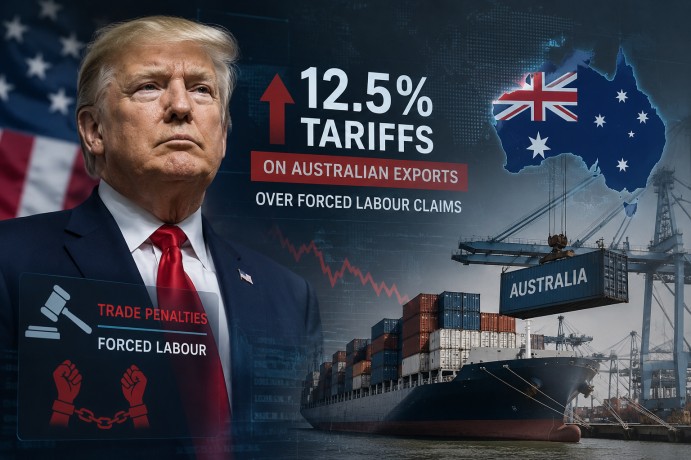
The United States has introduced a 12.5% tariff on numerous Australian exports, raising concerns over Australia’s efforts to prevent goods linked to forced labour from entering its supply chains. This decision has met with strong opposition from the Australian government, which argues that the tariffs are unwarranted and contradict the terms of the Australia-U.S. Free Trade Agreement. Trade Minister Don Farrell emphasized that Australia enforces some of the strictest laws globally against forced labour and modern slavery, and he has called on the U.S. to revoke the tariffs without delay.
The newly imposed tariffs impact a wide array of Australian exports. However, certain significant export categories such as beef, gold, various agricultural products, aircraft components, and specific mineral and industrial goods have been exempted from this measure. Australian officials have criticized the lack of evidence supporting this move and warned that it could strain bilateral trade ties. In addition to government officials, business groups and industry leaders have voiced their disapproval, labeling the tariffs as unjust and detrimental to Australian exporters.
This development occurs amid a broader expansion of trade measures by the Trump administration, which is targeting numerous countries over concerns related to the enforcement of forced labour prohibitions. The Australian government maintains that its legal framework is robust enough to combat issues of forced labour and modern slavery, and it has urged the U.S. to reconsider its approach.
Critics of the U.S. decision argue that the tariffs could have damaging repercussions for the trade relationship between the two nations, which is built on a foundation of mutual agreements and shared economic interests. Industry leaders in Australia have expressed concern that the tariffs represent a significant hurdle for exporters who are already navigating the complexities of international trade dynamics.