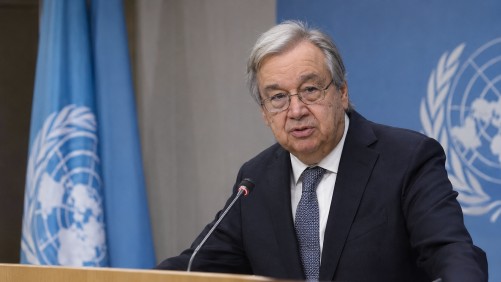
At the COP31 Leaders’ Summit in Antalya, United Nations Secretary-General Antonio Guterres issued a stark warning about the imminent breach of the 1.5°C global warming limit. Guterres urged nations to cut greenhouse gas emissions by approximately 6% annually to mitigate the impact of climate change and expedite the transition from fossil fuels.
Guterres highlighted the insufficiency of current climate commitments, which, if unchanged, could lead to a temperature rise exceeding 2.5°C by the century’s end. Despite this bleak outlook, he emphasized that there remains an opportunity to limit the extent and duration of temperature increases beyond the 1.5°C threshold.
The Secretary-General also pointed out the issue of climate inequality, where developing economies outside China make up nearly two-thirds of the global population yet receive less than one-fifth of the total clean-energy investment worldwide. He called for increased financial support to assist these countries in transitioning to cleaner energy sources.
An important topic at the summit was the emphasis on electrification, with several countries backing the 35-by-35 Global Electrification Pledge. This initiative aims to boost electricity’s share of global energy consumption to 35% by 2035, up from approximately 23% now, while also expanding renewable energy sources, power grids, and energy storage capabilities.
Guterres warned that reliance on fossil fuels exposes countries to the volatility of international price fluctuations, underlining the necessity for greater investments in renewable energy infrastructure and electricity storage. India added that the energy transition must consider the financial capacities, infrastructure, and development priorities of individual countries. It also advocated for affordable financing and technology access to aid developing economies in reaching their climate objectives.