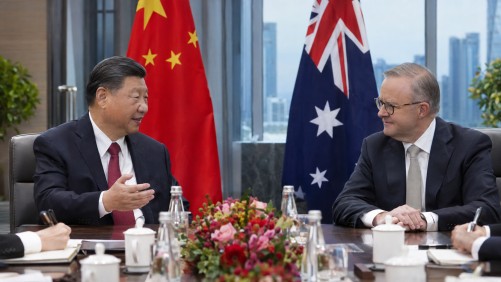
During the Asia-Pacific Economic Cooperation (APEC) summit in Shenzhen, Chinese President Xi Jinping commended the enhanced diplomatic relations with Australia, noting a “comprehensive turnaround” since Prime Minister Anthony Albanese took office in 2022. The improvement follows multiple discussions between the two leaders, with Xi advocating for increased collaboration in sectors such as agriculture, energy, the green economy, and artificial intelligence.
Prime Minister Albanese emphasized Australia’s dedication to engaging positively with China while acknowledging the necessity of managing bilateral differences. He highlighted the significance of China’s economic activities on Australia, given its status as Australia’s largest trading partner.
Relations between the two countries had previously soured when the former Australian government demanded an independent investigation into the origins of COVID-19, leading to trade restrictions by China on Australian goods like timber, coal, barley, lobsters, and wine. These restrictions have largely been lifted since the election of the Labor government under Albanese.
Despite these improvements, tensions persist, particularly concerning regional security and trade issues. Australia has expressed concerns over China’s influence in the South Pacific and has scrutinized foreign investments in critical minerals. Additionally, Canberra has criticized China’s proposal to create a central purchasing body for iron ore, a key Australian export, arguing that it could undermine market competition.
Looking ahead, Albanese is expected to meet Chinese Premier Li Qiang in Beijing. This meeting will include a business roundtable featuring key executives from major Australian mining companies such as Rio Tinto and BHP, as well as representatives from Chinese businesses, to further explore economic opportunities and address ongoing trade challenges.