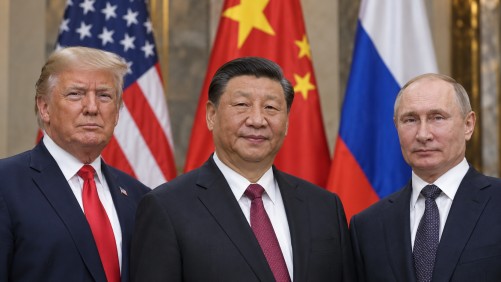
In a historic diplomatic engagement, U.S. President Donald Trump, Chinese President Xi Jinping, and Russian President Vladimir Putin convened for a trilateral meeting in Shenzhen, China, on November 19, 2026. The discussions centered on nuclear security, international stability, and energy cooperation, marking a significant step in global diplomatic relations.
The leaders issued a joint statement underscoring their commitment to reducing nuclear risks and reforming international institutions. They pledged to bolster cooperation to prevent nuclear conflict, emphasizing the shared belief that a nuclear war cannot be won and must never be fought. This meeting followed the expiration of the New START nuclear arms control agreement between the United States and Russia earlier in the year, which has led to renewed discussions about a potential new agreement that would include China.
While the summit tackled pressing issues, it did not yield major breakthroughs on current international conflicts, particularly the wars in Ukraine and Iran. Despite this, the leaders agreed on enhancing global fuel supplies by increasing the production and supply of refined petroleum products. President Trump stressed the importance of maintaining oil shipments through the Strait of Hormuz, vital for global energy markets, amidst the ongoing conflict in Iran.
Separate bilateral discussions also took place. President Trump and President Xi addressed economic and trade relations, with a focus on agricultural purchases and regional security, including the sensitive issue of Taiwan. Both expressed a desire for stable relations and improved communication. Similarly, Trump and Putin had a bilateral meeting to discuss international security and the Ukraine conflict, though no significant resolution was achieved.
The joint declaration also touched on the International Criminal Court, advocating for the respect of state officials’ immunity and cautioning against the misuse of judicial authority. This reflects the leaders’ concerns about international governance and judicial processes.
Despite the absence of concrete agreements on some contentious issues, the Shenzhen meeting is viewed as an important diplomatic development. Its long-term significance hinges on whether the commitments made will be translated into tangible cooperation among the United States, China, and Russia.